
Most overseas buyers focus on injection machines or sewing floors when evaluating a toy supplier, yet production delays rarely start on the main line. More often, bottlenecks trace back to disorganized spare parts, misplaced hand tools, or delayed toy tooling maintenance between production runs.
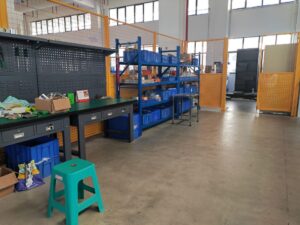
Inside our workshop, technical maintenance and component staging are separated from open floor traffic using yellow steel mesh enclosures. Behind this partition sits a dedicated workstation fitted with pegboard tool panels, lockable drawer cabinets, and heavy-duty blue shelving racks filled with categorized plastic bins. Keeping screwdrivers, calibration gauges, and small hardware mounted and labeled directly above the green workbench cuts down technician search time during mold changeovers or equipment adjustments.
Just as important is physical inventory separation. Each blue tote bin on the steel rack holds specific sub-assemblies, fasteners, or spare hardware isolated from active bulk packaging. Clear floor walkways, natural high-window lighting, and fenced zoning prevent cross-contamination between different client orders—especially when running multiple OEM plastic and plush projects simultaneously.
For brand owners and sourcing managers, a clean maintenance bay is more than good housekeeping. It means faster line resets, fewer missing hardware issues, and predictable lead times from pilot runs to mass shipment.
Fenced Tooling & Parts Storage Bay

