
Where Toy Quality Takes Shape: A Closer Look at an OEM Assembly Line
A finished toy may look simple on the shelf, but consistent production requires much more than putting components together. On a professional toy assembly line, workers, equipment, materials, inspection points, and production instructions must work within the same process.
For overseas brands, retailers, wholesalers, and promotional toy buyers, this part of manufacturing deserves close attention. The assembly floor is where approved components become finished products, while many quality issues can be identified before products reach packing.
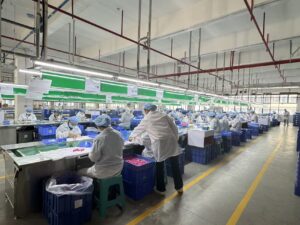
The production floor shown here reflects a structured manufacturing environment designed for high-volume toy assembly and process control.
Organized Workstations Support Stable Output
A well-planned toy assembly line gives each production stage a defined working area. Materials are positioned close to operators, finished components move through the required sequence, and production areas remain clearly separated.
This type of layout helps reduce unnecessary handling while keeping production activities easier to monitor.
For OEM projects, stable workflow becomes especially important when buyers require large quantities, repeated production runs, or consistent product specifications across different orders.
Quality Checks Take Place During Production
Quality control should not begin only when the finished cartons are ready for shipment.
During assembly, operators can identify issues such as:
- Incorrect component placement
- Appearance defects
- Assembly inconsistencies
- Missing parts
- Packaging-related problems
Early detection gives the production team an opportunity to correct problems before they continue through the remaining processes.
This approach can reduce rework, material waste, and unnecessary delays near the shipping date.
Production Discipline Matters in Custom Toy Projects
OEM toy manufacturing often involves customized colors, components, packaging, or product structures. Small differences can become noticeable when thousands of units are produced.
Clear production instructions help operators follow approved specifications throughout the order. Sample references, component identification, inspection requirements, and process instructions provide practical guidance during mass production.
For buyers, this level of production discipline is often more valuable than simply seeing a large factory building.
Material Flow Affects Production Efficiency
The blue production bins visible across the workshop are part of a practical material-handling system. Keeping components close to the relevant workstations can help reduce unnecessary movement during assembly.
Efficient material flow supports:
- Smoother production movement
- Better workstation organization
- Faster component replenishment
- Easier production supervision
- More consistent workflow
For large OEM orders, these details can have a direct effect on production efficiency.
A Production Line Is Also a Quality Management Tool
An effective assembly line is not simply a place where workers perform repetitive tasks. It can also provide a clear framework for monitoring production quality.
Supervisors can observe production progress, check workstation conditions, identify bottlenecks, and respond to problems during the order.
This visibility becomes increasingly important when a project involves tight delivery windows or high-volume production.
What Global Buyers Should Look for During a Factory Visit
A factory visit can provide information that cannot be fully understood from a quotation or product catalog.
When visiting a toy manufacturer, buyers should look beyond the number of machines. Pay attention to:
- How materials are organized
- Whether production areas are clearly defined
- How workers follow production instructions
- Where quality inspections take place
- How finished components move between processes
- Whether production management appears consistent
These observations can help buyers understand how a factory actually manages production.
Supporting Reliable OEM Toy Production
A dependable manufacturing partner needs to combine production capacity with process discipline. Equipment provides the manufacturing capability, while people, procedures, material control, and quality management determine how consistently that capability is delivered.
For brands and distributors developing customized toys, these factors can influence product quality, production efficiency, rework rates, and delivery performance.
The real strength of an OEM manufacturer is therefore not only the final product. It is the production system behind every unit that leaves the factory.Production Control on the Assembly Floor
An organized assembly floor supports consistent production through controlled material flow, defined workstations, process checks, and disciplined quality management.

